
Where Strategy Meets Experience Design
Event Design
Great events are not created by accident.
They are intentionally designed to produce specific outcomes.
Event design is the process of shaping the meeting experience so that every element — content, environment, and interaction — supports the goals of the organization and the needs of the audience.
Rather than starting with logistics, event design begins with purpose.
Why Event Design Matters
Many organizations begin planning meetings by asking questions like:
• What venue should we use?
• Who should speak?
• How many breakout sessions do we need?
While these are important operational decisions, they should come after a more important conversation:
What change should happen because this event exists?
Event design ensures that the event is intentionally structured to create that change.
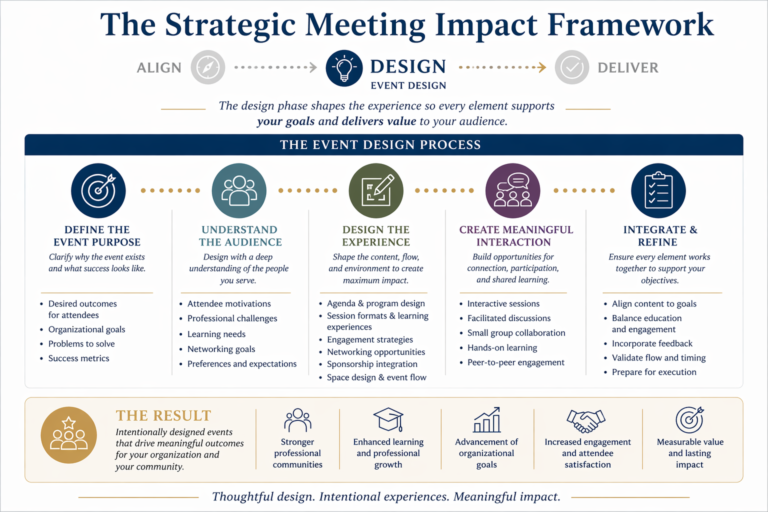
The Event Design Process
Event design is a structured approach that transforms a series of sessions into a purposeful experience.
As part of the Strategic Meeting Impact Framework, the design phase focuses on shaping how the event will deliver value to attendees and the organization.
Key elements of the event design process include:
Defining the Event Purpose
Every event should have a clearly defined purpose that aligns with the organization’s strategic goals.
This includes identifying:
• The desired outcomes for attendees
• The goals of the organization
• The problems the event should help solve
Understanding the Audience
Great event design begins with understanding the people who will attend. And understanding begins with the powerful skill of empathy.
This includes exploring:
• Attendee motivations
• Professional challenges
• Learning needs
• Networking goals
By understanding the audience, the event can be designed to create meaningful value.
Designing the Experience
Once the purpose and audience are clear, the meeting experience can be intentionally designed.
This may include:
• Agenda and program design
• Session formats and learning experiences
• Audience engagement strategies
• Networking opportunities
• Sponsorship integration
• Space design and event flow
Each element is selected to support the desired outcomes of the event.
Creating Meaningful Interaction
The most impactful events create opportunities for participants to engage with the ideas, the content, and each other.
This might include:
• Interactive sessions
• Facilitated discussions
• Small group collaboration
• Hands-on learning experiences
These design choices transform passive attendees into active participants.
The Result
When event design is intentional, meetings become more than a schedule of presentations.
They become experiences that:
• Strengthen professional communities
• Support learning and professional growth
• Advance organizational goals
• Deliver measurable value to attendees
Designing Events with Purpose
If your organization wants to create conferences and meetings that deliver stronger outcomes, event design is the place to begin.
Let’s discuss how to intentionally design your next event to support your organization’s goals.