Every conference planner I know is feeling the pressure.
“Should we have a ChatGPT session?”
“Do we need an AI track?”
“What AI tools should we teach this year?”
Those are reasonable questions.
But they’re also the wrong questions.
AI tools are changing almost weekly. Today’s favorite platform becomes tomorrow’s forgotten app. If your annual conference spends all its time teaching members which buttons to click, your content may already be outdated before next year’s registration opens.
Instead, associations should be asking a much bigger question:
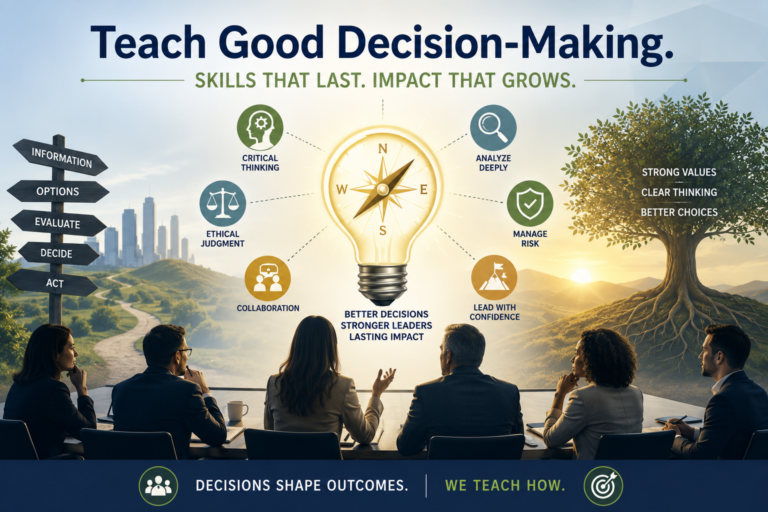
How can we help members make better decisions—regardless of the technology they use?
That’s the kind of education that never goes out of style.
Technology Changes. Judgment Doesn’t.
Think about the biggest challenges your members face.
They’re rarely wondering:
“Which AI platform should I use?”
They’re asking questions like:
- How do I make a difficult decision with incomplete information?
- How do I balance efficiency with ethics?
- How do I evaluate whether AI is producing reliable results?
- How do I lead people through change?
- How do I communicate complex ideas more effectively?
- How do I know when AI should not make the decision?
Those questions will still matter five years from now.
Probably fifty.
Technology is simply another tool. Good judgment is the skill that determines whether that tool creates value—or creates problems.
AI Is Becoming a Commodity
Remember when knowing how to use email was considered a competitive advantage?
Or spreadsheets?
Or search engines?
Eventually, everyone learned them.
AI is heading down the same path.
The tools will become easier.
Interfaces will improve.
Many features will simply become built into the software your members already use.
The competitive advantage won’t be knowing how to use AI.
It will be knowing when, why, and whether to use it.
That’s a leadership skill.
Not a software tutorial.
Conferences Should Build Better Thinkers
The most valuable conference sessions don’t simply transfer information.
They change how people think.
Imagine sessions that explore:
- Real-world decision-making under pressure
- Ethical dilemmas involving AI
- Critical thinking and fact verification
- Leading teams through technological change
- Managing risk when automation is involved
- Asking better questions before accepting AI-generated answers
These conversations have a much longer shelf life than demonstrations of the newest application.
Better yet, they create discussion.
And discussion creates engagement.
The Best Learning Happens Through Scenarios
One of the biggest mistakes conferences make is assuming education is about delivering answers.
It isn’t.
It’s about helping professionals develop better judgment.
Imagine presenting attendees with realistic scenarios.
A member uses AI to draft a proposal. It sounds polished—but it contains subtle inaccuracies.
Do you submit it?
How do you verify it?
What policies should your organization have?
How do you explain the risks to leadership?
These conversations are infinitely more valuable than watching someone demonstrate the latest prompt library.
Members don’t just leave with information.
They leave with confidence.
This Is Where Certification Programs Have an Advantage
Strong certification programs have always focused on applying knowledge—not simply memorizing facts.
That same philosophy should shape your conference education.
When conferences, certification, continuing education, and professional development all reinforce better decision-making, they become part of a unified certification ecosystem rather than a collection of disconnected educational experiences.
Members begin to recognize a consistent promise:
“This association helps me become a better professional—not just a better software user.”
That’s a powerful differentiator.
Your Conference Is Preparing Members for the Future
The future doesn’t belong to the people who know the most AI tools.
It belongs to the professionals who know how to evaluate information, solve complex problems, collaborate effectively, and make sound decisions in uncertain situations.
Technology will continue to evolve.
Those human capabilities become even more valuable as they do.
Associations that recognize this shift won’t simply host better conferences.
They’ll build stronger leaders, create more meaningful learning experiences, and develop certification programs that members value throughout their careers.
That’s education with staying power.
And that’s the kind of impact members remember long after the conference ends.
Is Your Certification Ecosystem Preparing Members for the Future?
If your conference, certification program, continuing education, and member learning strategy aren’t intentionally working together, you may be missing opportunities to create deeper engagement and greater long-term value.
Take the Certification Program Health Check. In just five minutes, you’ll discover where your certification ecosystem is strong, where gaps may exist, and where opportunities for growth are hiding.
After you’ve reviewed your results, schedule a call with me. Together, we’ll discuss your findings and explore practical strategies to strengthen your certification ecosystem, improve member engagement, and create learning experiences that have a lasting impact.
The future isn’t about teaching the next AI tool.
It’s about helping professionals make better decisions—no matter what tool comes next.
Ellen Maiara, CMP, CED, is a Fractional Chief Experience Officer who helps credential-driven associations streamline certification, continuing education, conferences, learning lineups, and overwhelmed program teams, so credentialing becomes a scalable revenue engine.